Gutters play an important role in protecting a home from rainwater by collecting runoff from the roof and directing it away from the foundation. When leaves, twigs, dirt, and other debris accumulate inside the channels, water may overflow or downspouts may become blocked. Regular gutter cleaning can help maintain proper drainage and reduce the risk of water-related problems around the home.
The safest and most effective cleaning method depends on the height of the gutters, the amount of debris, and the equipment available. Homeowners can choose from several approaches, including cleaning from the ground, using a ladder, or hiring a professional.
Why Regular Gutter Cleaning Matters
Gutters are designed to move rainwater away from the home’s foundation. When they become clogged, water can spill over the sides and collect near the foundation. Persistent runoff may contribute to moisture problems around basements, crawl spaces, windows, and exterior walls.
Blocked gutters can also become particularly problematic during colder weather. Freeze-thaw cycles can cause accumulated water or snow to freeze inside the gutter system, adding weight and potentially damaging or pulling gutters away from the roofline.
Regular cleaning helps keep water moving freely through the gutters and downspouts while making it easier to identify leaks, loose sections, or other maintenance concerns.
Cleaning Gutters From the Ground
Cleaning gutters from the ground is generally one of the safer approaches because it eliminates the need to climb a ladder. Although it may take longer and provide less visibility, the right tools can make the process effective.
Use a Garden Hose
A garden hose fitted with a suitable curved or extended attachment can help remove leaves and smaller debris from gutters. Starting near the downspout and working along the gutter channel allows debris to be directed toward the drainage point.
This method can become messy, so homeowners should expect water and debris to fall over the sides of the gutter. After removing loose material, flushing the gutter and downspout can help confirm that water flows properly.
Use a Wet/Dry Vacuum
A wet/dry vacuum equipped with a gutter-cleaning attachment can remove leaves, twigs, and other loose debris while the homeowner remains on the ground. Curved extensions can make it easier to reach the gutter channel from below.
After vacuuming, flushing the gutters and downspouts with water can help remove remaining particles and reveal potential blockages.
Cleaning Gutters With a Ladder
Some gutter systems are difficult to reach from the ground, particularly when debris has accumulated heavily. In these situations, a ladder may be necessary, but ladder work requires extra caution.
A stable extension ladder with appropriate stabilizing equipment is preferable to a step ladder for reaching elevated gutters. Having another person on the ground to help stabilize the ladder can provide additional support.
Homeowners should avoid leaning excessively to reach distant sections. Moving the ladder as needed is safer than stretching beyond a comfortable position.
Effective Tools for Ladder-Based Cleaning
Leaf Blower
A leaf blower can quickly remove dry leaves and small twigs from gutters. A suitable nozzle attachment can help direct the airflow into the gutter channel. Blocking the downspout temporarily can prevent debris from being pushed into the drainage system.
Once the loose debris has been removed, flushing the gutters with a hose can help clear anything that remains.
Pressure Washer
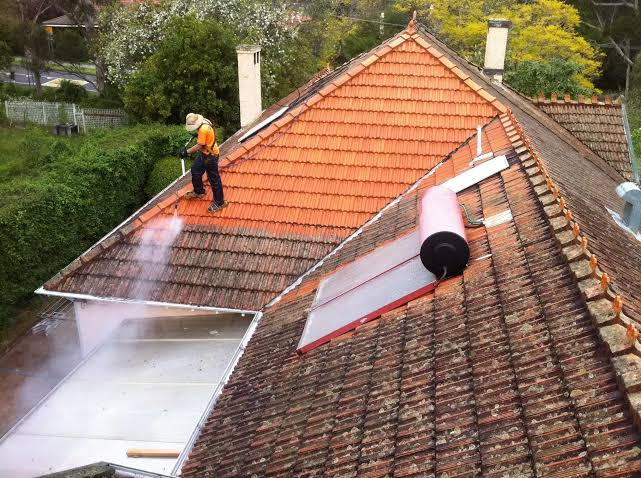
A pressure washer can help remove stubborn dirt and accumulated debris from some gutter systems. However, it can create significant spray and mess, so surrounding walls, siding, landscaping, and roofing materials should be considered before use.
Pressure should also be controlled carefully to avoid damaging gutters or forcing water into areas where it does not belong.
Manual Cleaning
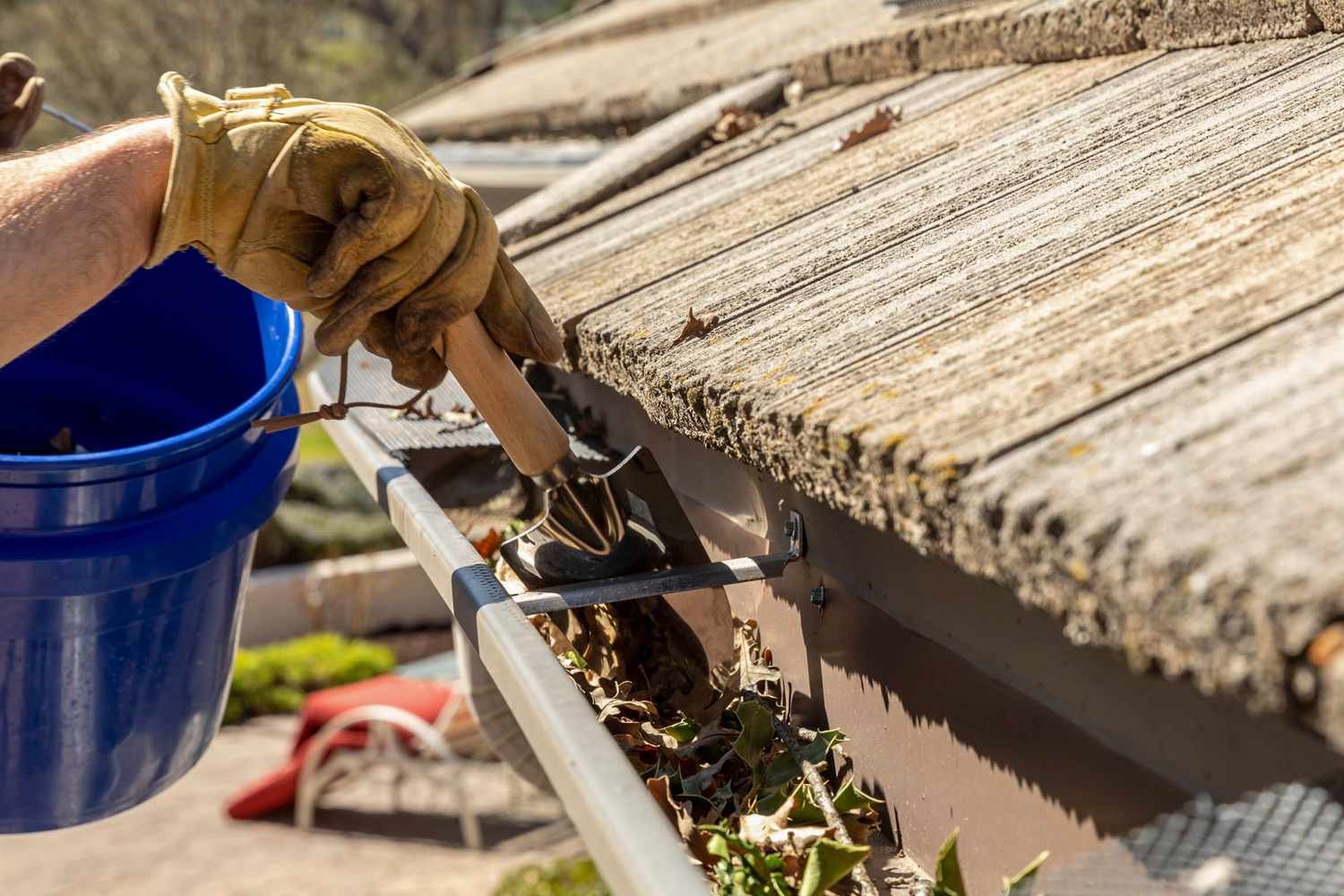
For heavy or compacted debris, cleaning by hand may be the most practical approach. A gutter scoop, bucket, and durable work gloves can help homeowners remove leaves, dirt, and other material.
After the debris has been removed, the gutters and downspouts should be flushed with water to confirm that the drainage system is working properly.
If a downspout remains blocked, a plumber’s snake or similar tool may help loosen the obstruction before the system is rinsed.
Gutter Cleaning Safety
Safety should always be a priority when cleaning gutters. Working from the ground is generally preferable because it eliminates the risk associated with climbing. When a ladder is unavoidable, homeowners should use stable equipment on level ground and avoid overreaching.
Walking on the roof to clean gutters should be avoided. Roof surfaces can be slippery, steep, or fragile, making unnecessary roof access hazardous.
For taller homes or difficult-to-reach gutter systems, professional gutter cleaning may be the safer option. Professionals have equipment designed to access elevated gutters without requiring homeowners to take unnecessary risks.
How to Prevent Gutter Clogs
Preventive maintenance can reduce how frequently gutters need to be cleaned. Gutter guards and screens can help keep leaves, twigs, and larger debris from entering the drainage channels while allowing rainwater to pass through.
Homes surrounded by trees may still require periodic inspection even when gutter guards are installed. Leaves and other organic material can accumulate on top of guards or around roof edges.
Regular inspections can also help identify leaking joints, loose sections, damaged downspouts, and other problems before they become more serious.
Conclusion
Clean gutters are essential for directing rainwater away from the home and protecting areas around the foundation. Whether homeowners choose a garden hose, wet/dry vacuum, leaf blower, manual cleaning, or professional service, the goal is the same: remove debris and make sure water can move freely through the entire drainage system.
Safety should remain the deciding factor when choosing a cleaning method. Ground-based tools can reduce ladder use, while professional gutter cleaning may be the better choice for tall or difficult-to-access homes. With regular cleaning and preventive maintenance, homeowners can help keep their gutter systems functioning effectively throughout the year.
FAQs
Gutters should generally be inspected and cleaned regularly, particularly during seasons when leaves and other debris accumulate. Homes surrounded by trees may require more frequent cleaning than properties with fewer nearby trees.
Cleaning gutters from the ground with an appropriate hose or vacuum attachment is generally safer than working from a ladder. For tall or difficult-to-reach gutters, hiring a professional can reduce the risk of falls.
A pressure washer can remove stubborn dirt and debris from some gutter systems, but it should be used carefully. Excessive pressure or improper handling can damage gutters or surrounding surfaces.
No. Walking on the roof unnecessarily increases the risk of slips, falls, and roof damage. Ground-based tools, safe ladder practices, or professional gutter cleaning are better alternatives.